Galvanizadora Bento Sul

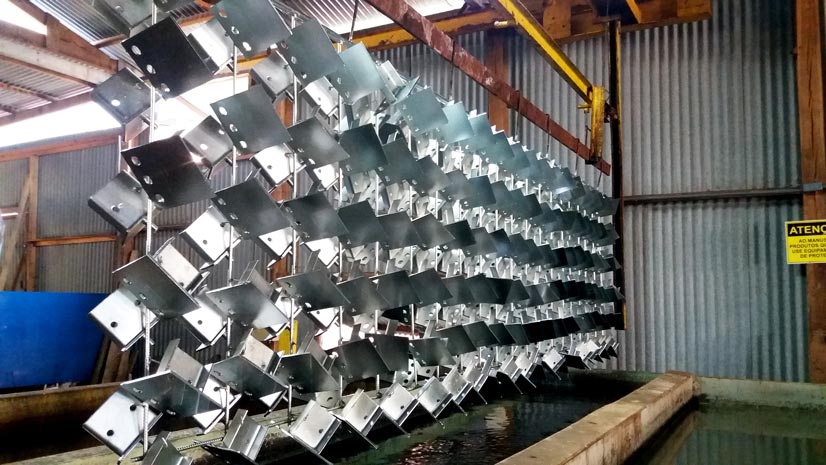
⚙️ New Electrolytic Galvanizing Line expands Bento Sul’s production capacity

Bento Sul continues to invest in technology, infrastructure, and modernization to meet the demands of the industrial market with excellence. 🚀

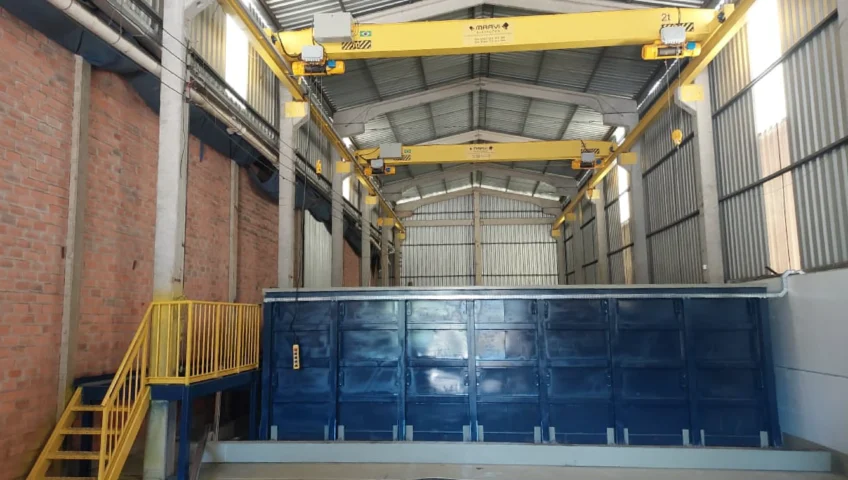
Recently, the company began operating a new electrolytic galvanizing line, strengthening its production capacity and reinforcing its commitment to quality, efficiency, and innovation.


🔩 New modern and automated line

The new line has the following dimensions:

7,000 mm in length
1,950 mm in height
1,250 mm in width

Designed to handle larger parts with a high standard of finish, the structure is fully equipped with automatic rectifiers, ensuring greater control of process parameters and providing more uniform coating on the parts.

In addition, the line includes:

🏗️ 2 overhead cranes with a 2-ton capacity
⚙️ 4 hoists for moving parts

This modern configuration provides greater agility in the production flow and significantly increases the company’s operational efficiency.

📈 The estimated production capacity of the new line is approximately 250 to 300 tons per month.


🏭 Complete structure with multiple production lines

Currently, Bento Sul has 4 electrolytic galvanizing lines, prepared to meet different industrial demands.

The lines have capacities of:

🔹 4 meters
🔹 5 meters
🔹 6.5 meters
🔹 7 meters (new line in operation since March)

This variety allows greater service flexibility and enables the processing of parts with different sizes and specifications, always maintaining a high standard of quality.


🚀 Continuous expansion and new investments

Bento Sul’s growth continues to move forward.

📅 For June 2026, the completion of another electrolytic galvanizing line with 4 meters in length is planned, further expanding the company’s production capacity.

All Bento Sul lines are equipped with:

✅ Automatic rectifiers
✅ Overhead cranes with capacities between 1 and 2 tons
✅ Modern and efficient structures


✅ Commitment to quality, technology, and productivity

With a modern structure and continuous expansion, Bento Sul is consolidating itself as a company prepared to meet demands of different sizes, offering electrolytic galvanizing solutions with a high level of control, productivity, and quality.

Continuous investment in technology and infrastructure ensures greater process efficiency, standardization, and excellence in the final finish of galvanized parts. 🔧✨

Electrodeposition or Electroplating

Electrodeposition or Electroplating

Electroplating or galvanizing is a surface treatment that consists of depositing a metal onto a substrate (metallic or not) through chemical or electrolytic reduction for protection, improved conductivity, and better suitability for welding on the treated surface. Other applications include improving appearance, binding non-conductive particles to the electrodeposited layer, abrasion resistance, improving surface hardness, temperature resistance, among others.

Electrodeposition or electroplating:

According to the Rosseti Dictionary of Chemistry, we can define electroplating as the technology responsible for transferring metal ions from a given solid surface or liquid medium called an electrolyte to another surface, whether metallic or not. This process uses electric current and is called “electrolysis”.

Electroplating was developed by Galvani, a physicist and chemist who studied electricity.

Electrodeposition is related to surface coating; it is the process used in silver plating, nickel plating, chrome plating, etc.

The object to be coated during electrodeposition must be connected to the negative pole of the generator, forming the cathode. For example, we can apply a gold or silver bath (gilding and silver plating) to a ring made of aluminum. The ring will be the cathode, connected to the negative pole of the generator; connected to the positive pole there should be a gold sheet.

These electrodes must be immersed in an aqueous solution of a gold salt, for example, gold(III) nitrate (Au(NO3)3].

Au3+ + 3e- → Au negative pole (half-reaction at the cathode – reduction) Au → Au3+ + 3e- positive pole (half-reaction at the anode – oxidation)

We could also use an inert electrode (platinum) at the anode, the aluminum ring at the cathode, and an aqueous solution of Au(NO3)3. The deposition of gold on the ring does not originate at the anode; the gold is present in the solution, and it is advisable that it be concentrated:

H2O → 2 H+ + ½ O2 + 2e- positive pole (half-reaction at the anode – oxidation) Au3+ + 3e- → Au negative pole (half-reaction at the cathode – reduction)

If we want to chrome-plate an iron bumper, it must be connected to the negative pole of the generator, forming the cathode. The positive electrode must be a chromium bar, or else the electrode must be inert and the electrolytic solution must contain a chromium salt (Cr3+). Industrially, the process of chrome plating automobile bumpers is carried out in three stages: • Copper plating • Nickel plating and • Chrome plating. This is intended to provide greater adhesion to the chromium, preventing the bumper from peeling and losing the chrome plating.

In the electroplating process, the reactions are not spontaneous; it is necessary to supply electrical energy for electron deposition (electrolysis) to occur. Electroplating is therefore an electrodeposition process in which the object that will receive the metallic coating is connected to the negative pole of a direct current source and becomes the cathode. The metal that will provide the coating is connected to the positive pole and will be the anode. The object to be coated must conduct electric current. If the object is plastic, which is not a good conductor, a surface treatment will make it conductive. There is also the problem of adhesion of one metal to another. For the metal film to bond to the base, in addition to perfect cleaning and degreasing, it is necessary to know the nature of the metals.

Galvanizing Galvanizing or electroforming is the entire electrolytic process that consists of coating the surfaces of metal parts with other, more noble metals. This coating is generally applied to protect the part from corrosion and/or as an aesthetic/decorative finish.

Galvanizing consists of using two electrodes immersed in an electrolytic solution connected to a direct current source or alternating current, converted to direct current and rectified. The part to be coated must function as the cathode, i.e., it must be connected to the negative pole of the electric current source. The anode, connected to the positive pole of the source, may be made of an inert material (graphite, lead, stainless steel, platinized titanium, etc.) or made of the metal with which the part is to be coated. The electrolytic solution must contain, as the electrolyte, a salt that contains cations of the same metal.

When the anode is made of the metal with which the part is to be coated, the electrolytic process occurs with a transfer of metal from this electrode to the part through the electrolytic solution.
Example: Coating a part with silver, using a silver anode (silver plating):

Anode: Ag → Ag+ + e –
Cathode: Ag+ + e – → Ag
The anode metal oxidizes. The cation formed goes into the solution, and the cation in the solution is reduced at the cathode, adhering in metallic form.

When the anode is an inert material, the discharge of water from the solution occurs there. The cation in the solution is reduced at the anode, also adhering to the part.
Example: Coating a part with chromium, using an inert anode, lead (chrome plating):

Anode: H2 → 2 H+ + 1/2 O2 + 3 e-
Cathode: Cr3+ + 3 e- → Cr
When using an inert anode, the concentration of cations must be higher because there is no replenishment of them by the anode.

Depending on the metal with which the part or object is coated, galvanizing receives special names: gilding (gold), chrome plating (chromium), silver plating (silver), nickel plating (nickel), and others.

The galvanizing process, or the application of a zinc coating, can be carried out in the following ways:

Zinc plating or Electrolytic Galvanizing; (cold)
Hot-Dip Zinc Plating; (or by fire)
Thermal Spraying Zinc Plating – metallization

We divide electroplating technology into two main parts:

The first and most widely used is deposition by means of electrolysis. That is, through electric current, a difference in electrical potential is created, thus favoring the deposition of a metal onto another surface, usually metallic and with opposite polarity.
The second form, more elaborate and therefore less widespread, is chemical deposition, which consists of depositing dissolved metal ions in the form of their salts, which, due to a difference in chemical potential, tend to deposit onto other surfaces, metallic or not, generating deposits with characteristics often superior to electrolytic deposits in terms of cohesion and deposit density.

ELECTROLYTIC ZINC PLATING/GALVANIZING

White zinc plating;
Yellow zinc plating;
Black zinc plating;
Black oxidation.

Zinc-Plated and Galvanized

What is the difference between zinc-plated and galvanized?

In fact, any process in which a metal part receives a coating of another, more noble metal, with the purpose of protecting against corrosion, providing greater conductivity, or simply for aesthetic reasons, is called Galvanizing!

DIFFERENCE BETWEEN ZINC-PLATED AND GALVANIZED

That’s right—zinc plating is also a form of galvanizing. The thing is that, popularly, when we call a part Galvanized, we are referring to Hot-Dip Galvanizing (or Hot-Dip Zinc Plating). And that is where the confusion arises.

ELECTRODEPOSITION OF METALS

Cold galvanizing, in turn, can use Zinc, Copper, Nickel, Brass, Gold, Bronze, Chrome, and so on. It is also known as Electrolytic Galvanizing, because the chosen metal is deposited onto the part through a process that involves electricity. This process is called Metal Electrodeposition.

It is necessary to supply electrical energy for the metal to be deposited from its ions by providing electrons (electrolysis). It is, therefore, an electrodeposition in which a direct current is forced to pass through the electrodes and the solution, causing the metal that forms the coating to be connected to the positive pole to promote its oxidation, replenishing in the solution the cations of the metal electrodeposited on the conductive object connected to the negative pole.

Whereas, in Hot-Dip Galvanizing, it is done when carbon steel or cast iron parts are immersed in a tank of molten zinc (very hot!). The diffusion of zinc into the part’s crystal lattice provides much longer-lasting protection than in Electrolytic Galvanizing.

DIFFERENCE BETWEEN ZINC-PLATED AND GALVANIZED

Therefore, when someone asks you “What is the difference between zinc-plated and galvanized?” you can answer that zinc plating is a form of galvanizing, and there is no way to differentiate them—rather, they should be classified in the correct hierarchy along with other types of galvanizing.

Source: Indufix

Galvanizadora Bento Sul

Learn more about galvanization and its processes

Galvanization is the process of coating one metal with another to protect it against corrosion or to improve its appearance. It is a surface coating process using electrolysis, where the metal to be coated acts as the cathode and the coating metal acts as the anode (an inert material can also be used as the anode). The electrolytic solution must contain a salt composed of cations of the metal intended for the coating. The thickness of the layer deposited by the electrogalvanization process is controlled through mathematical models.

The coating of metallic surfaces can also occur by immersing the metal to be coated into the molten metal that will cover it. However, the electrolytic process allows for better (more homogeneous) coverage, although both methods are equally utilized. In this immersion process, the coating thickness is controlled by the speed at which the part passes through the metallic bath, the furnace temperature of the coating metal, and the application of a nitrogen jet at the end of the process.

Different metals can be used for coating a part. The process of coating with chromium, for example, is called “chrome plating”; if the coating is nickel, it is called “nickel plating.” We also have zinc, tin, magnesium, gold, copper, silver, etc. Each coating metal can provide different characteristics to the galvanized material according to its properties, such as higher or lower conductivity, or resistance to extreme temperatures.

The coating of thin steel sheets with tin results in a product called “tinplate,” used in the manufacture of cans to store various products such as preserves, oils, etc. Tin is used for this application because it is a metal that exhibits greater resistance to oxidation when in contact with water, which is generally present in these products. The process of coating steel with tin is generally performed by immersion.

In the case of iron, the most common corrosion protection is achieved through the deposition of metallic zinc. Zinc has the characteristic of oxidizing faster than iron. Thus, if a crack or peeling occurs in a galvanized iron* plate, leaving the iron exposed, the zinc will oxidize faster than the iron. Therefore, as long as there is zinc, the iron will not be oxidized.

*Zinc-coated iron is generally referred to as “galvanized iron.”

Sources:
http://www.cdcc.usp.br/exper/medio/quimica/6eletroquimg.pdf
http://educar.sc.usp.br/ciencias/quimica/qm1-3.htm#termica
http://www.cienciamao.usp.br/dados/t2k/_quimica_q23d.arquivo.pdf

Galvanizadora Bento Sul

Saving with the Galvanization Process

Production of metal parts

Iron and steel are widely used materials in the production of metal parts. Steel is a metal alloy composed mostly of iron (≈98.5%); it also contains carbon (0.5 to 1.7%) and traces of silicon, sulfur, and oxygen.

However, a negative aspect of materials made of iron and steel is that, over time, they rust, causing significant economic and environmental losses. It is estimated that approximately 20% of the iron produced worldwide is used solely to replace rusted parts.

Protection Against Iron Corrosion

Some of the most widely used methods to protect iron and steel, thereby reducing the enormous losses caused by rusting, are electroplating and galvanization.

Electroplating is a process in which the metal part to be protected is coated with a more noble metal that acts as a sacrificial metal; that is, this metal will have a higher oxidation potential than iron and will therefore oxidize in its place.

Cold galvanization, in turn, can involve the use of zinc, copper, nickel, brass, gold, bronze, chrome, and so on. It is also known as electrolytic galvanization, as the chosen metal is deposited onto the part through a process involving electricity. This process is called metal electrodeposition.

Electrical energy must be supplied for the metal to be deposited from its ions through the supply of electrons (electrolysis). This is an electrodeposition process in which a direct current is forced through the electrodes and the solution, causing the coating metal to be connected to the positive pole to promote its oxidation, replenishing the solution with cations of the metal electrodeposited onto the conductive object connected to the negative pole.

Galvanizadora Bento Sul What is electrolytic galvanizing

What is electrolytic galvanizing?

What is electrolytic galvanizing. Application of zinc coating by electrodeposition. It is a technique that allows for a more uniform coating than hot-dip galvanizing and does not affect the mechanical properties of the material.

Galvanizing is the process of applying a protective layer of zinc or zinc alloys to a steel or iron surface to prevent corrosion.

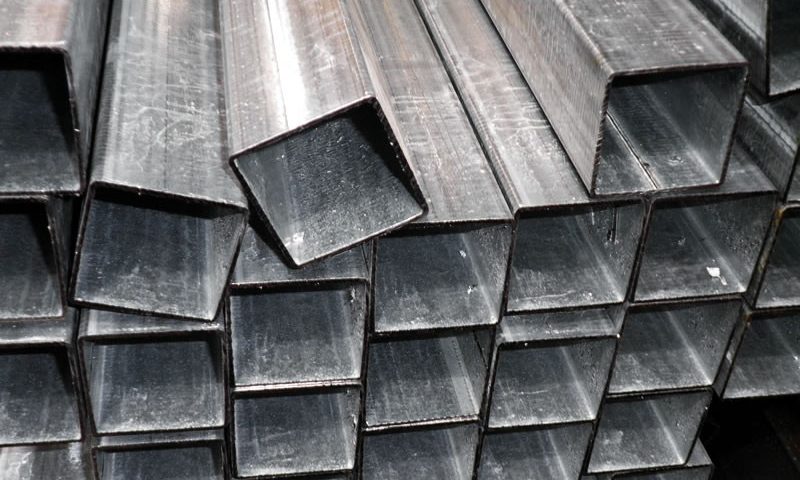
Electrolytic zinc plating is the process of depositing a layer of zinc onto the surface of a part. The process occurs through a metallic bath applied to the parts, improving both their resistance and appearance.

Zinc is one of the most efficient elements for coating metal parts, as it acts as an insulator for the plated item, preventing it from coming into contact with air and oxidizing easily.

Surface treatment through electrolytic zinc plating also involves a set of chemical substances known as passivators. These passivators serve to seal the zinc layer deposited on the parts, increasing their resistance to oxidation.

Passivators also provide different coloring to the parts and, if the customer desires, there are blue, yellow, or black options for galvanizing. Parts subjected to electrolytic zinc plating have a very uniform, smooth, and shiny surface finish, with the possibility of coloring.–

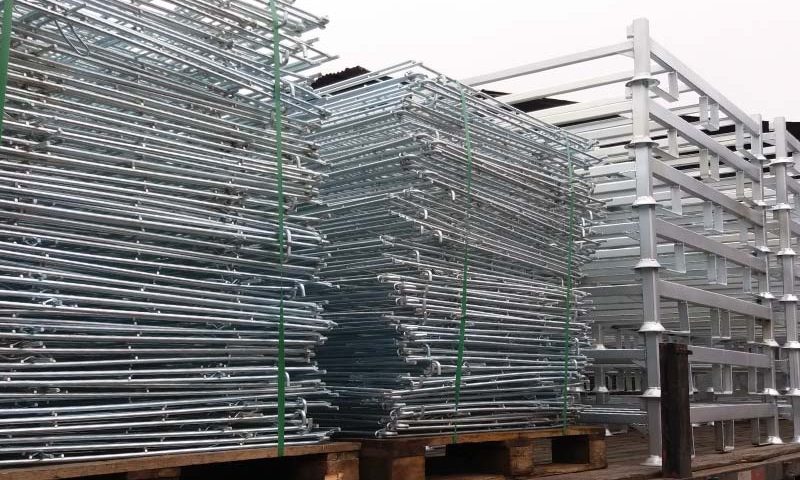
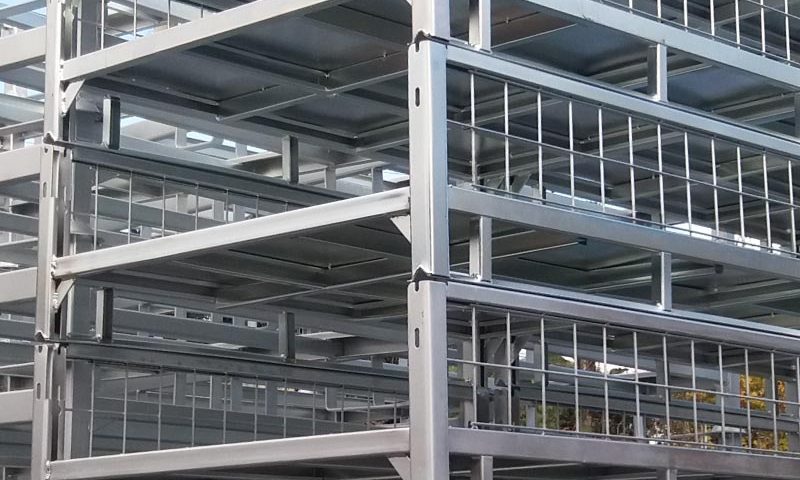
Electrolytic zinc plating is widely used by industries in various market sectors and even end consumers for the surface treatment of gates, metal structures, structural and finishing automotive parts, machinery, equipment, and a wide variety of components.

Electrolytic Galvanizing

Quality, advantages, and safety of galvanization

Electrolytic galvanizing is a metal part treatment process widely used for various types and models of parts across different market segments.

It is essentially the application of zinc onto a surface. This process serves civil construction companies as well as various industries, being widely used throughout Brazil due to its ease and practicality.

It can be applied to gates, support structures, junction boxes, and more, as well as structural parts for cars, motorcycles, trucks, and heavy machinery. This process offers several advantages and must be performed with the highest quality and safety.

ADVANTAGES OF ELECTROLYTIC GALVANIZING

Electrolytic galvanizing brings several advantages to the metal parts receiving the treatment; one of them is the possibility of featuring different colors: BLUE, YELLOW, OR BLACK. This coloring occurs because of passivators that serve as sealers for the zinc layer.

Another advantage of electrolytic galvanizing is that it offers greater resistance and durability for the part, increasing its lifespan, protecting against oxidation, and enhancing its appearance. These advantages lead to the large-scale application of this process for both small and large parts.

QUALITY AND SAFETY OF ELECTROLYTIC GALVANIZING

To ensure maximum quality and safety, electrolytic galvanizing must always be performed using excellent raw materials, labor, and equipment. Furthermore, electrolytic galvanizing must always follow the main technical quality and safety standards of its segment.

All of this ensures parts with greater resistance and durability, as well as an excellent cost-benefit ratio for clients, meeting all their needs and specifications. Clients can also galvanize parts of their choice.

Do you know how the galvanizing process works? What is it used for?

Iron and steel are materials widely used in the production of metal parts. Steel is a metal alloy composed mostly of iron; it also contains carbon and traces of silicon, sulfur, and oxygen. However, a negative aspect of materials made of iron and steel is that, over time, they rust, causing significant economic and environmental losses. It is estimated that approximately 20% of the iron produced worldwide is used solely to replace rusted parts. To prevent or at least reduce these losses, there are several methods of protection against metal corrosion, and one of the most efficient is galvanizing. Galvanizing is a process in which an iron or steel part is coated with metallic zinc. Rust forms through the oxidation of metallic iron to iron cations in the presence of oxygen in the air and water. Iron and most metals (except gold and platinum) have a lower reduction potential than oxygen and, therefore, these metals tend to oxidize.

Galvanizadora Bento Sul

Do you know what a gas scrubber is used for?

What is a gas scrubber?

A gas scrubber is a piece of equipment that works to collect all gas and vapor particles in environments. It features a pulverized water mechanism and pressurized nozzles. When in operation, the equipment helps control air pollution by removing particulate matter from the environment. The gas scrubber’s operation process occurs through the collision of particles with a washing system using water or another type of fluid.

The gas scrubber device typically employs pulverized water and features a chamber. During the particle collection process, a collision occurs between the droplets and the residues. After this collection, mechanical processes are simply used to eliminate the droplets and impurity particles.

Benefits of gas scrubbers

There are several direct benefits of gas scrubbers. With the correct interaction between droplets and impurity particles, the environment becomes cleaner and safer for health. Furthermore, the gas scrubber also reduces the flow of gases and pollutants originating from industrial processes.

The equipment operates from a power source and works to nebulize the washing medium. The scrubber may have an annular passage orifice, pre-adjusted flow rate, degree of turbulence, and atomization level appropriate for each type of environment, among other characteristics.

In general, scrubbers are employed in industrial processes that need to process gases resulting from chemical and physicochemical activities. Modern devices can be used across various particle size ranges. Each industry can request an ideal scrubber profile for its activity, according to the needs and demands of each segment.

Among the advantages of the gas scrubber, we can mention:

  • Treatment of solid, gaseous, and liquid pollutants;
  • Efficient operation under various conditions;
  • No temperature restrictions for gases;
  • No humidity restrictions for gases;
  • Control of combustible substances;
  • Compact profile;
  • Allows for the development of customized projects.

For more information about gas scrubbers, contact the professionals at Ventitec Li-AR! The company specializes in this type of system and has a wide portfolio of successfully completed projects!

Galvanizadora Bento Sul

Follow Bento Sul on Social Media

These beauties that have ushered in the new era are, for thousands of people, just a form of entertainment. For others, however, they are essential work tools, especially when it comes to digital marketing.

People are increasingly connected—interacting, engaging, offering praise and criticism, consuming content at all times and in all places. The world is in the palm of your hand with advances in technology, and companies that fail to recognize the potential of investing in social media are certainly falling behind.

At Bento Sul Galvanização, we like to always stay up to date with new technologies, so we seek to get closer to our clients through social media, where we can connect at any time and from anywhere.

Follow us on Facebook and Instagram