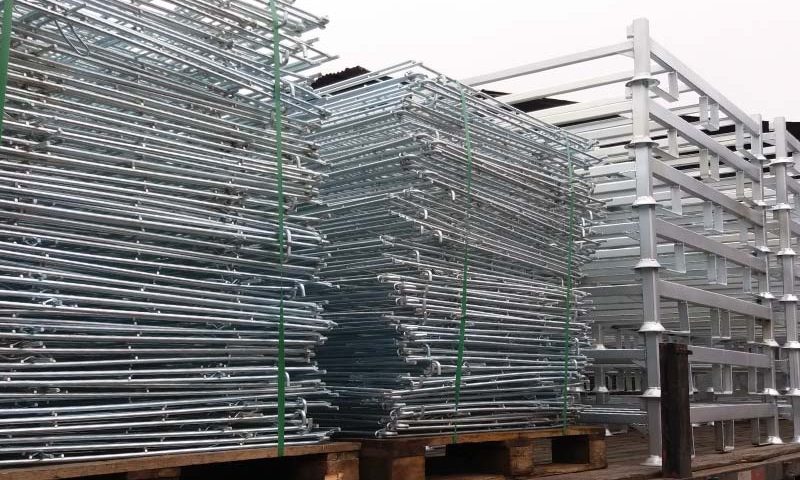
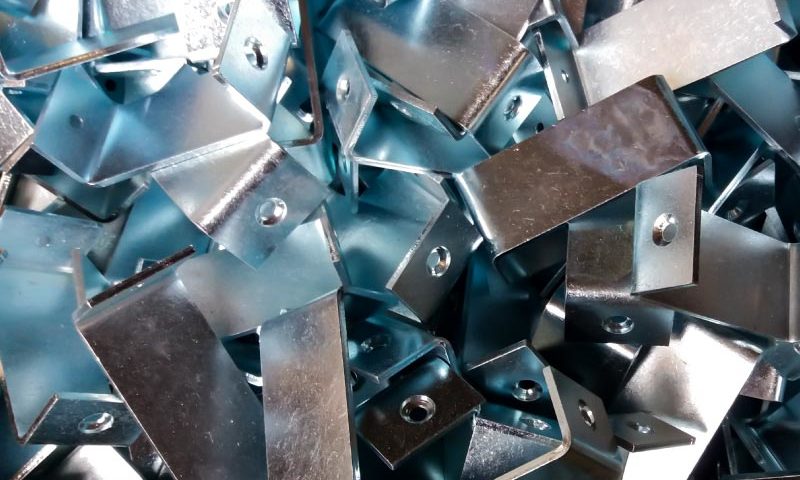
Zinc-Plated and Galvanized

What is the difference between zinc-plated and galvanized?

In fact, any process in which a metal part receives a coating of another, more noble metal, with the purpose of protecting against corrosion, providing greater conductivity, or simply for aesthetic reasons, is called Galvanizing!

DIFFERENCE BETWEEN ZINC-PLATED AND GALVANIZED

That’s right—zinc plating is also a form of galvanizing. The thing is that, popularly, when we call a part Galvanized, we are referring to Hot-Dip Galvanizing (or Hot-Dip Zinc Plating). And that is where the confusion arises.

ELECTRODEPOSITION OF METALS

Cold galvanizing, in turn, can use Zinc, Copper, Nickel, Brass, Gold, Bronze, Chrome, and so on. It is also known as Electrolytic Galvanizing, because the chosen metal is deposited onto the part through a process that involves electricity. This process is called Metal Electrodeposition.

It is necessary to supply electrical energy for the metal to be deposited from its ions by providing electrons (electrolysis). It is, therefore, an electrodeposition in which a direct current is forced to pass through the electrodes and the solution, causing the metal that forms the coating to be connected to the positive pole to promote its oxidation, replenishing in the solution the cations of the metal electrodeposited on the conductive object connected to the negative pole.

Whereas, in Hot-Dip Galvanizing, it is done when carbon steel or cast iron parts are immersed in a tank of molten zinc (very hot!). The diffusion of zinc into the part’s crystal lattice provides much longer-lasting protection than in Electrolytic Galvanizing.

DIFFERENCE BETWEEN ZINC-PLATED AND GALVANIZED

Therefore, when someone asks you “What is the difference between zinc-plated and galvanized?” you can answer that zinc plating is a form of galvanizing, and there is no way to differentiate them—rather, they should be classified in the correct hierarchy along with other types of galvanizing.

Source: Indufix
Galvanizadora Bento Sul

Learn more about galvanization and its processes

Galvanization is the process of coating one metal with another to protect it against corrosion or to improve its appearance. It is a surface coating process using electrolysis, where the metal to be coated acts as the cathode and the coating metal acts as the anode (an inert material can also be used as the anode). The electrolytic solution must contain a salt composed of cations of the metal intended for the coating. The thickness of the layer deposited by the electrogalvanization process is controlled through mathematical models.

The coating of metallic surfaces can also occur by immersing the metal to be coated into the molten metal that will cover it. However, the electrolytic process allows for better (more homogeneous) coverage, although both methods are equally utilized. In this immersion process, the coating thickness is controlled by the speed at which the part passes through the metallic bath, the furnace temperature of the coating metal, and the application of a nitrogen jet at the end of the process.

Different metals can be used for coating a part. The process of coating with chromium, for example, is called “chrome plating”; if the coating is nickel, it is called “nickel plating.” We also have zinc, tin, magnesium, gold, copper, silver, etc. Each coating metal can provide different characteristics to the galvanized material according to its properties, such as higher or lower conductivity, or resistance to extreme temperatures.

The coating of thin steel sheets with tin results in a product called “tinplate,” used in the manufacture of cans to store various products such as preserves, oils, etc. Tin is used for this application because it is a metal that exhibits greater resistance to oxidation when in contact with water, which is generally present in these products. The process of coating steel with tin is generally performed by immersion.

In the case of iron, the most common corrosion protection is achieved through the deposition of metallic zinc. Zinc has the characteristic of oxidizing faster than iron. Thus, if a crack or peeling occurs in a galvanized iron* plate, leaving the iron exposed, the zinc will oxidize faster than the iron. Therefore, as long as there is zinc, the iron will not be oxidized.

*Zinc-coated iron is generally referred to as “galvanized iron.”

Sources:
http://www.cdcc.usp.br/exper/medio/quimica/6eletroquimg.pdf
http://educar.sc.usp.br/ciencias/quimica/qm1-3.htm#termica
http://www.cienciamao.usp.br/dados/t2k/_quimica_q23d.arquivo.pdf

Galvanizadora Bento Sul What is electrolytic galvanizing

What is electrolytic galvanizing?

What is electrolytic galvanizing. Application of zinc coating by electrodeposition. It is a technique that allows for a more uniform coating than hot-dip galvanizing and does not affect the mechanical properties of the material.

Galvanizing is the process of applying a protective layer of zinc or zinc alloys to a steel or iron surface to prevent corrosion.

Electrolytic zinc plating is the process of depositing a layer of zinc onto the surface of a part. The process occurs through a metallic bath applied to the parts, improving both their resistance and appearance.

Zinc is one of the most efficient elements for coating metal parts, as it acts as an insulator for the plated item, preventing it from coming into contact with air and oxidizing easily.

Surface treatment through electrolytic zinc plating also involves a set of chemical substances known as passivators. These passivators serve to seal the zinc layer deposited on the parts, increasing their resistance to oxidation.

Passivators also provide different coloring to the parts and, if the customer desires, there are blue, yellow, or black options for galvanizing. Parts subjected to electrolytic zinc plating have a very uniform, smooth, and shiny surface finish, with the possibility of coloring.–

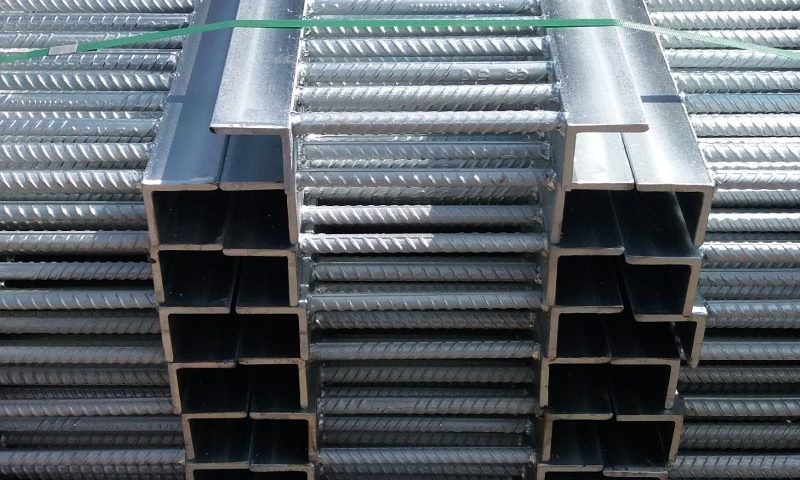
Electrolytic zinc plating is widely used by industries in various market sectors and even end consumers for the surface treatment of gates, metal structures, structural and finishing automotive parts, machinery, equipment, and a wide variety of components.